
Software Development Trends 2026: AI Agents, Rust, and the New Engineering Era
Software development in 2026 looks nothing like it did three years ago.
AI isn't just helping developers write code anymore. It's becoming a participant in the software development lifecycle with its own permissions, its own failure modes, and its own governance requirements.
Here are the four biggest trends shaping how software gets built in 2026 — and what they mean for developers, teams, and businesses.

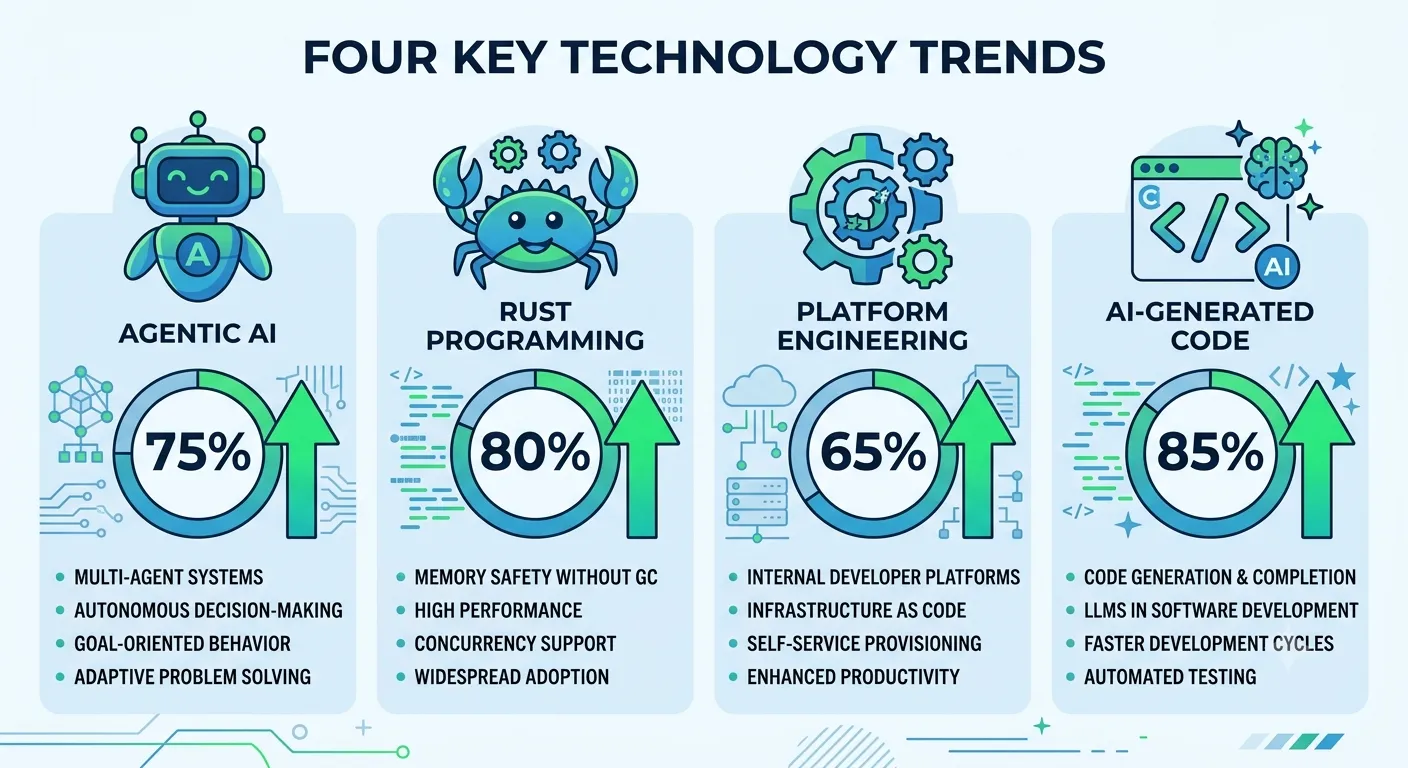
Image: AI agents are becoming active participants in the software development lifecycle.
1. Agentic AI: From Assistants to Autonomous Teams
This is the biggest shift in 2026. We have moved beyond AI coding assistants that suggest code snippets. We are now in the era of agentic AI — autonomous systems that can gather requirements, generate architectures, write code, and deploy applications with minimal human intervention.
Anthropic's 2026 Agentic Coding Trends Report describes this as the evolution from single AI assistants to coordinated agent teams that can run autonomously for hours or days — while engineers move from writing code to orchestrating the systems that write it.
What this means for developers: Your role is shifting. You are becoming a manager of coding machines rather than just a code writer. You spend less time on first drafts and more time steering AI, validating diffs, hardening edge cases, and managing exceptions.
What this means for organizations: Gartner predicts that 80% of organizations will evolve large software engineering teams into smaller, AI-augmented teams by 2030. The talent pipeline is being completely remade.
2. Rust Enters the Top 10 — And It's Here to Stay
For the first time ever, Rust has broken into the top 10 programming languages in the TIOBE index. This is not a flash in the pan. Rust's memory safety, performance, and growing ecosystem have made it the language of choice for systems programming, embedded development, and even AI infrastructure.
According to the PYPL index for July 2026, Python dominates with 47.49%, followed by Java at 11.44% and C/C++ at 9.68%. But Rust's rise is the story everyone is watching.
Why Rust matters: The programming language wars have shifted. We are no longer just debating syntax. We are debating AI-friendliness, memory safety, and infrastructure resilience. Rust delivers all three.
For AI infrastructure, Rust is becoming the go-to language for building memory-safe, high-performance systems. And with Mojo — a Python-compatible language that compiles to native machine speed — entering the scene, the systems programming landscape is more exciting than it has been in years.
3. AI-Generated Code Is Now in Production — Everywhere
This is no longer experimental. A study found that 44.7% of organizations are already running AI-generated code in production. And 80.5% have changed their development and release processes to account for AI-generated code.
Capgemini's 2026 technology trends report has named "software that builds itself" as one of the defining shifts in enterprise technology. Generative AI adoption is projected to reach 80% among organizations seeking to streamline software development in 2026.
The catch: Security isn't keeping up. Software is now written at the speed of thought. Security isn't. The top concern organizations are struggling to catch from week to week is security problems at 49.2%.
This is why security architecture must be embedded from the earliest stages. Secure delivery is shifting "left and up" — earlier in the development process and higher in the organizational hierarchy.
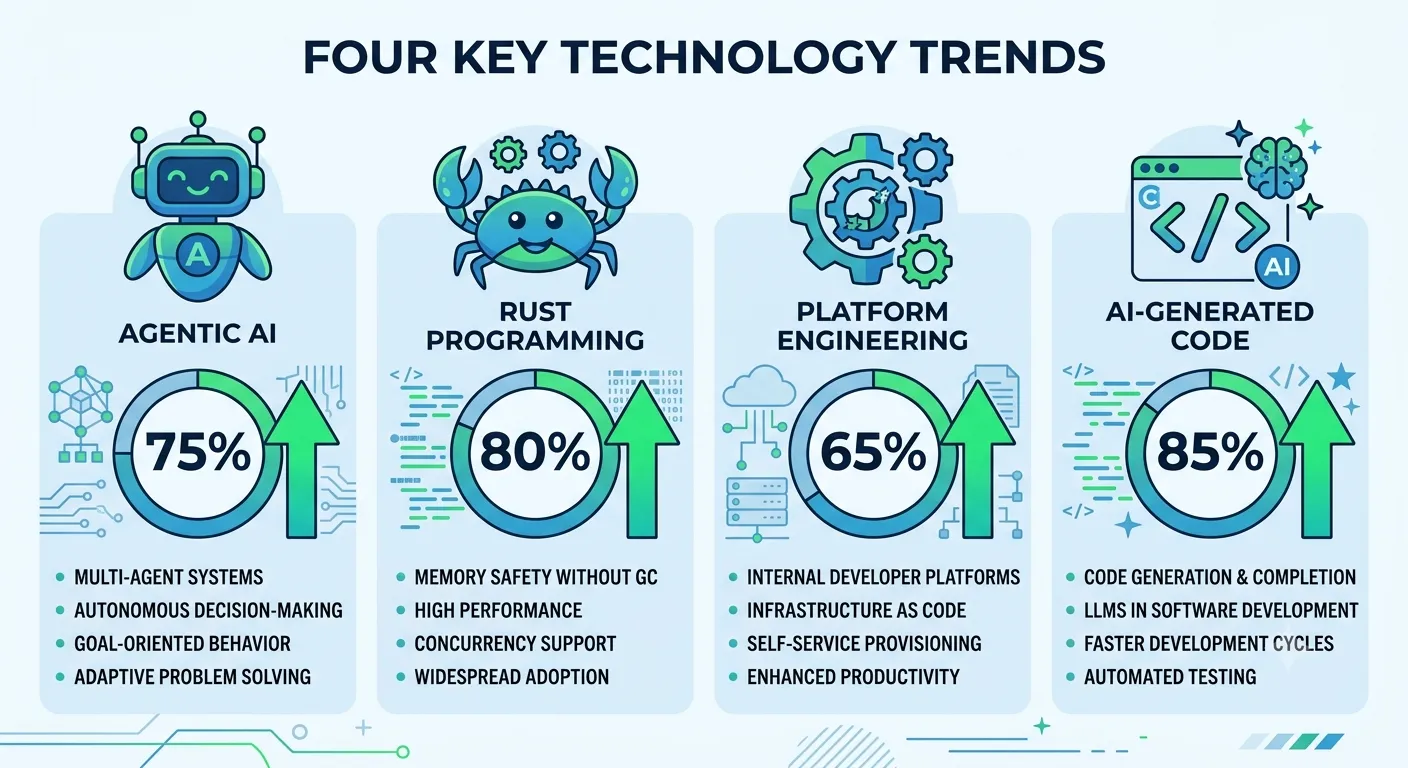
Image: The four trends reshaping software development in 2026.
4. Platform Engineering Goes AI-Native
Platform engineering — the practice of building internal developer platforms — has been around for a few years. But 2026 is the year it goes AI-native.
As AI coding assistants become increasingly common, organizations are reporting faster code generation and higher delivery throughput requirements. This is creating new demands on platform teams.
Platform Engineering 2.0 extends everything the community built in 1.0 and closes the structural gaps that the new era has exposed. AI-native development platforms are now a priority for CIOs.
Gartner identifies AI security platforms as a key 2026 strategic technology trend and predicts that by 2028, more than 50% of enterprises will use them to protect their AI investments.
Bonus: The Architecture Shift — Modular Monoliths Make a Comeback
Remember the microservices? In 2026, teams are pulling back. The most popular alternative is the modular monolith. It runs as a single deployment unit but is organized internally into clear modules with strong boundaries.
Many teams in 2026 settle on a hybrid: a core modular monolith handles most business logic, while a handful of separately deployed services handle workloads with genuinely different scaling, security, or technology requirements.
The lesson: simplicity still matters. Not every application needs microservices. And architectural choices must balance performance with long-term maintainability.
What This Means for Developers in 2026
Let me summarize what these trends mean for you:
Your role is evolving. You are moving from code writer to AI orchestrator. The people who thrive will be those who learn to manage AI agents, not just compete with them.
Your skills need to expand. AI literacy, architectural thinking, and ethical technology design are becoming as important as programming basics.
Security is everyone's job. With AI-generated code in production, security can no longer be an afterthought. Embed it early. Embed it everywhere.
Rust is worth learning. If you are a systems programmer, embedded developer, or AI infrastructure engineer, Rust is becoming non-negotiable.
Final Thoughts
2026 is the year software engineering transforms from a craft into an orchestration discipline. AI agents are writing code. Rust is reshaping systems programming. Platform engineering is going AI-native. And security is finally being taken seriously.
This is not the end of software engineering. It is the beginning of a new chapter — one where developers focus on higher-order problems while AI handles the routine. The tools are changing. The workflows are changing. The skills are changing.
The only constant is change itself. And in 2026, that change is accelerating faster than ever.
The future of software development is already here. Are you ready for it?
WebStudioLabs covers the latest in software development, AI, and technology trends. Bookmark us for more insights on where the industry is heading.
Check out our Api Development Service here