
ChatGPT Down: Global Outage Hits OpenAI's AI Chatbot on July 15, 2026
If you tried to use ChatGPT on the morning of July 15, 2026, and got nothing but error messages — you were not alone.
Millions of users worldwide suddenly found themselves locked out of OpenAI's flagship AI chatbot. The outage lasted approximately 45 minutes, sparking panic, memes, and a flood of complaints across social media.
Here is everything we know about the ChatGPT outage of July 15, 2026.
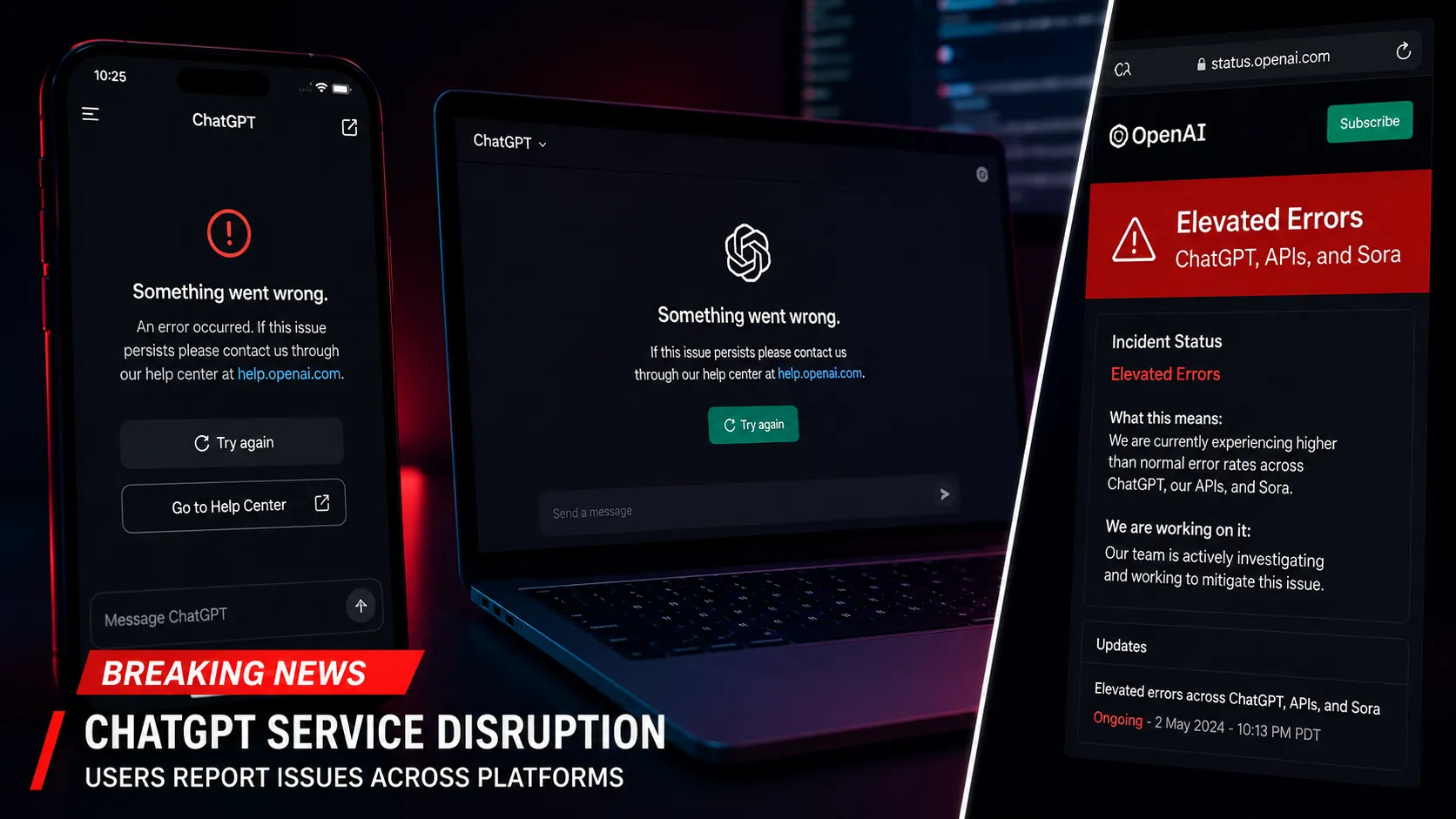
Image: Users worldwide were greeted with error messages during the July 15 outage.
The Timeline: What Happened and When
The outage struck early in the day, catching users off guard across multiple time zones.
7:57 AM (Local Time): OpenAI's status page first reported "login issues and intermittent errors affecting ChatGPT."
7:50 AM (Taiwan Time): Reports of a global outage began flooding in, with users in Asia reporting they could not connect to the servers.
8:22 AM (Taiwan Time): Service was restored and ChatGPT returned to normal operation.
8:39 PM ET: OpenAI confirmed all impacted services had recovered.
In total, the disruption lasted roughly 45 minutes — short enough to be a minor inconvenience, but long enough to remind millions just how dependent they have become on AI.
What Caused the Outage?
OpenAI's official status page confirmed there were "elevated errors" affecting ChatGPT. The company's engineering team immediately began investigating login issues and intermittent errors.
While OpenAI has not yet published a detailed root cause analysis for this specific incident, past outages offer clues. Previous disruptions have been traced to:
- Invalid configuration values in core services causing new server instances to fail when restarting
- Faulty code changes deployed to control plane clusters
- Third-party infrastructure failures, such as the Cloudflare outage in November 2025 that took down ChatGPT, X, and countless other services
The July 15 incident appears to have been an internal OpenAI issue rather than an external infrastructure problem, as other major services remained operational during the same period.
Social Media Erupts: "My Brain Is Offline"
When ChatGPT goes down, the internet loses its collective mind — and July 15 was no exception.
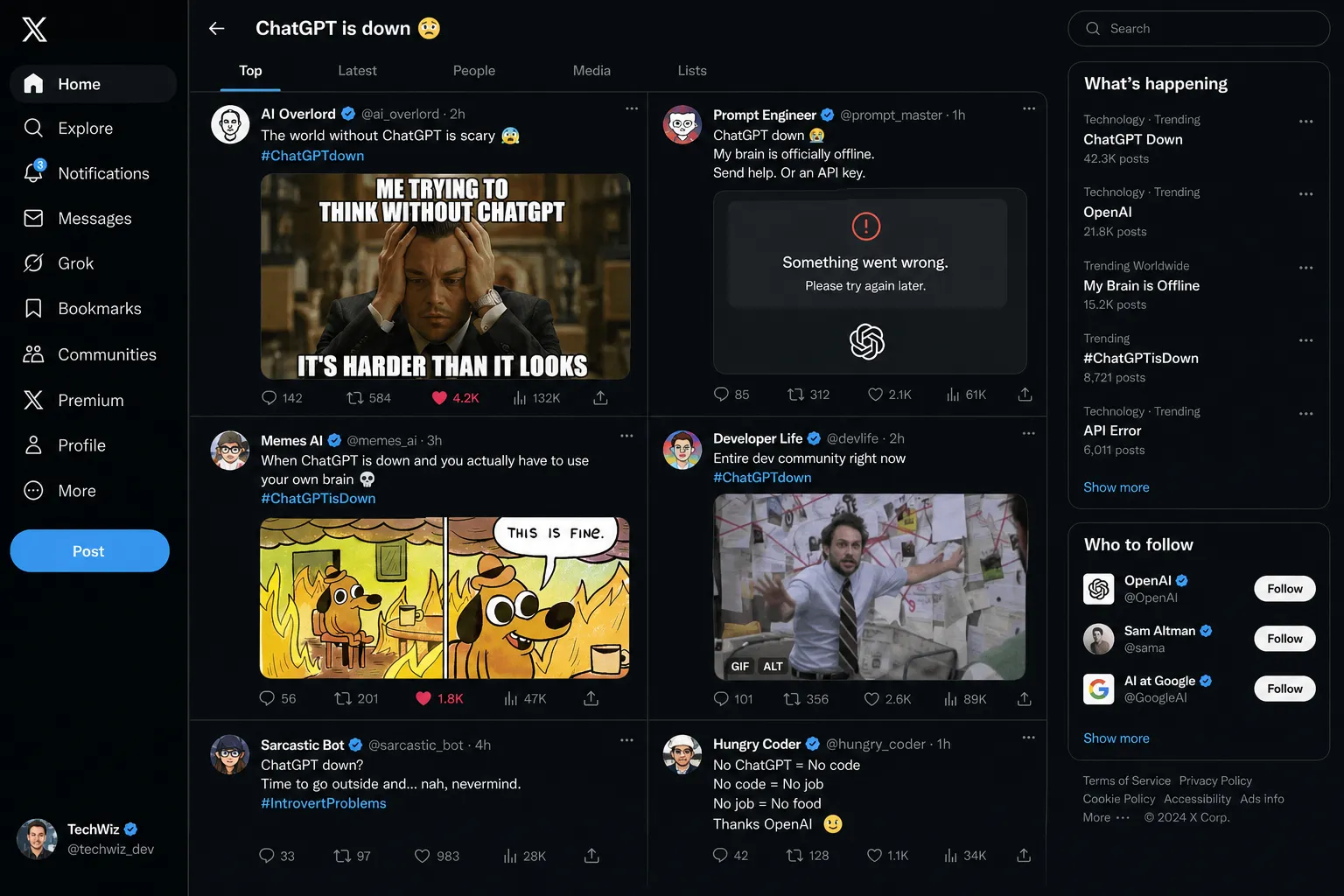
Within minutes of the outage, X (formerly Twitter) was flooded with complaints, memes, and existential dread.
Some of the most viral reactions included:
- "Looks like I'll have to start thinking for myself again." — A sentiment echoed by countless users who had grown accustomed to AI assistance for everything from work emails to dinner recipes.
- "ChatGPT is down and so is my productivity." — The outage hit during work hours in many regions, leaving professionals stranded without their AI co-pilot.
- "My brain is offline until ChatGPT comes back." — A humorous take on how deeply integrated AI has become in daily life.
The outage also sparked conversations about over-reliance on AI. If 45 minutes without ChatGPT feels like a crisis, what happens when the outage lasts hours or days?
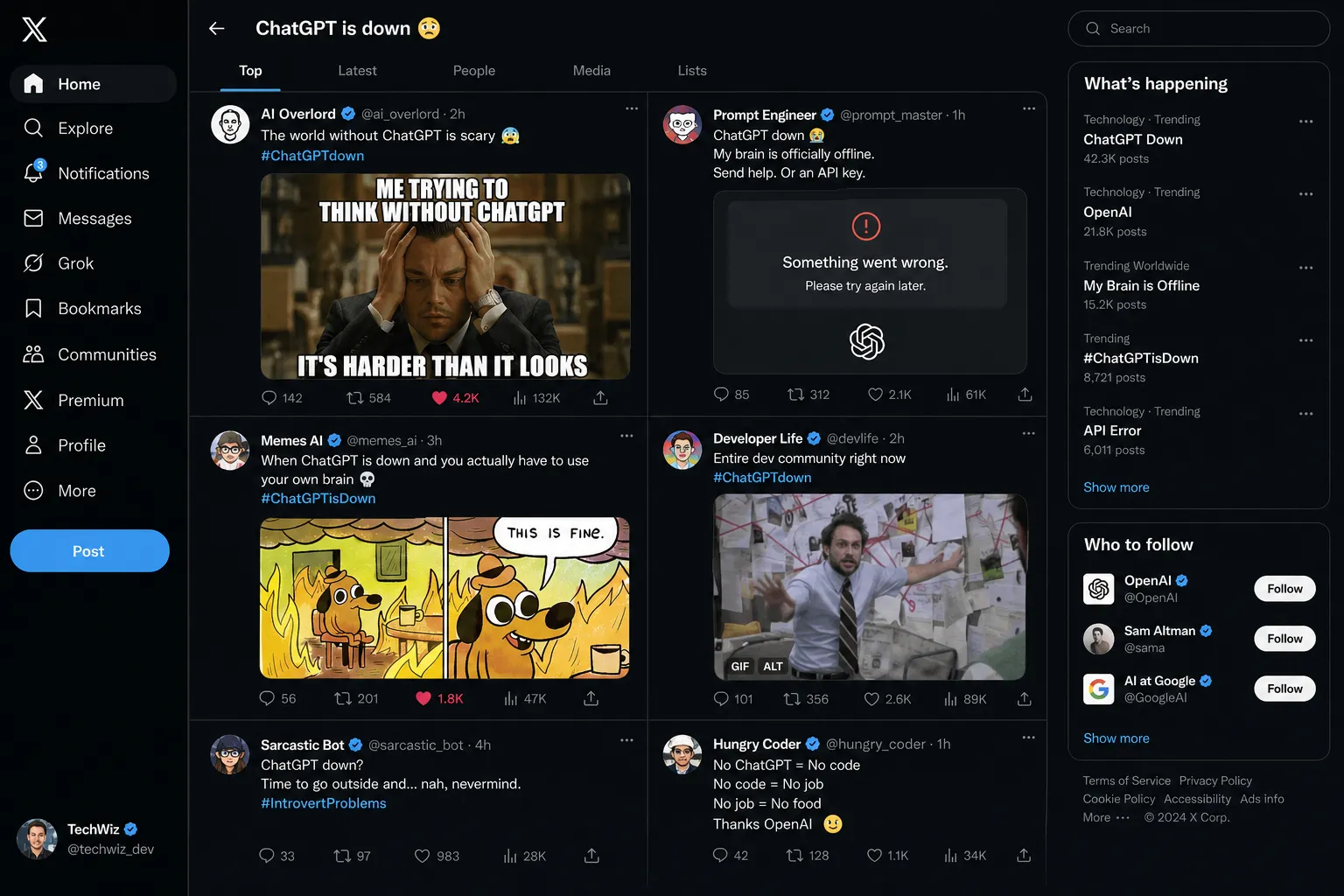
Image: Social media erupted with memes and panic during the 45-minute outage.
A Pattern of Outages: ChatGPT's 2025-2026 Track Record
This is not the first time ChatGPT has gone down — and it likely will not be the last. The AI chatbot has experienced several significant disruptions over the past year.
July 9, 2025: A faulty code change deployed to a control plane cluster caused elevated error rates.
July 16, 2025: A three-hour outage impacted ChatGPT, Sora, and Codex, affecting users globally.
July 21, 2025: Another outage lasted from 13:38 to 17:17 UTC, impacting paid subscribers. At its peak, Down Detector tracked over 1,500 reports in the US and nearly 1,000 in the UK.
September 1-3, 2025: Smaller outages occurred each day, with the last one lasting about 10 minutes.
November 18, 2025: A massive Cloudflare outage took down ChatGPT, X, Claude, Perplexity, and countless other services for hours.
July 15, 2026: The latest 45-minute disruption.
This pattern raises important questions about the reliability of AI infrastructure. As more businesses and individuals depend on AI for critical tasks, even short outages can have significant consequences.
What This Means for You
The July 15 outage is a reminder of a simple truth: AI is not infallible.
Here are a few takeaways for users and businesses alike:
1. Have a Backup Plan. If your workflow depends on ChatGPT, consider alternatives like Claude, Gemini, or Perplexity for critical tasks. When one service goes down, having a backup can save your productivity.
2. Monitor Official Channels. OpenAI's status page (status.openai.com) is the most reliable source for real-time updates during outages.
3. Don't Panic. Most outages are resolved within hours — or in this case, minutes. OpenAI's engineering team is typically quick to respond and restore service.
4. Consider the Bigger Picture. If 45 minutes without ChatGPT disrupts your entire day, it might be worth diversifying your toolset. No single service should be a single point of failure for your work.
OpenAI's Response
OpenAI acknowledged the issue quickly. The company's status page was updated within minutes of the outage being detected.
By 8:39 PM ET, OpenAI confirmed that all impacted services had fully recovered. The status page was updated to green, indicating normal operations.
As of the latest update, OpenAI has stated there are "no known issues" affecting its systems.
Final Thoughts
The ChatGPT outage of July 15, 2026, lasted just 45 minutes. But in that short window, millions of users were reminded of a uncomfortable truth: we have become deeply reliant on AI.
For students, professionals, and creatives alike, ChatGPT has become an indispensable tool — and when it goes down, productivity grinds to a halt.
The outage was resolved quickly. OpenAI's team responded promptly. And by mid-morning, the world's most popular AI chatbot was back online.
But the question lingers: What happens when the next outage lasts longer than 45 minutes?
For now, we can all breathe a sigh of relief. ChatGPT is back. The memes have subsided. And we can go back to asking AI to write our emails, debug our code, and plan our dinners.
Until the next time it goes down.
Stay calm. Have a backup. And remember — you can still think for yourself.
WebStudioLabs covers the latest in AI, technology, and digital trends. Bookmark us for real-time updates on outages, releases, and everything tech.
Check out our Professional SEO Service here