
Agentic AI in 2026: The Rise of Enterprise AI Coding Agents
For years, AI coding tools meant autocomplete. GitHub Copilot would suggest the next line. ChatGPT would generate a function. But in 2026, that era is officially over.
Welcome to the age of agentic AI — where AI doesn't just suggest code, it plans, delegates, and executes entire development tasks autonomously. And the market is exploding.
Here is everything you need to know about enterprise AI coding agents in 2026.
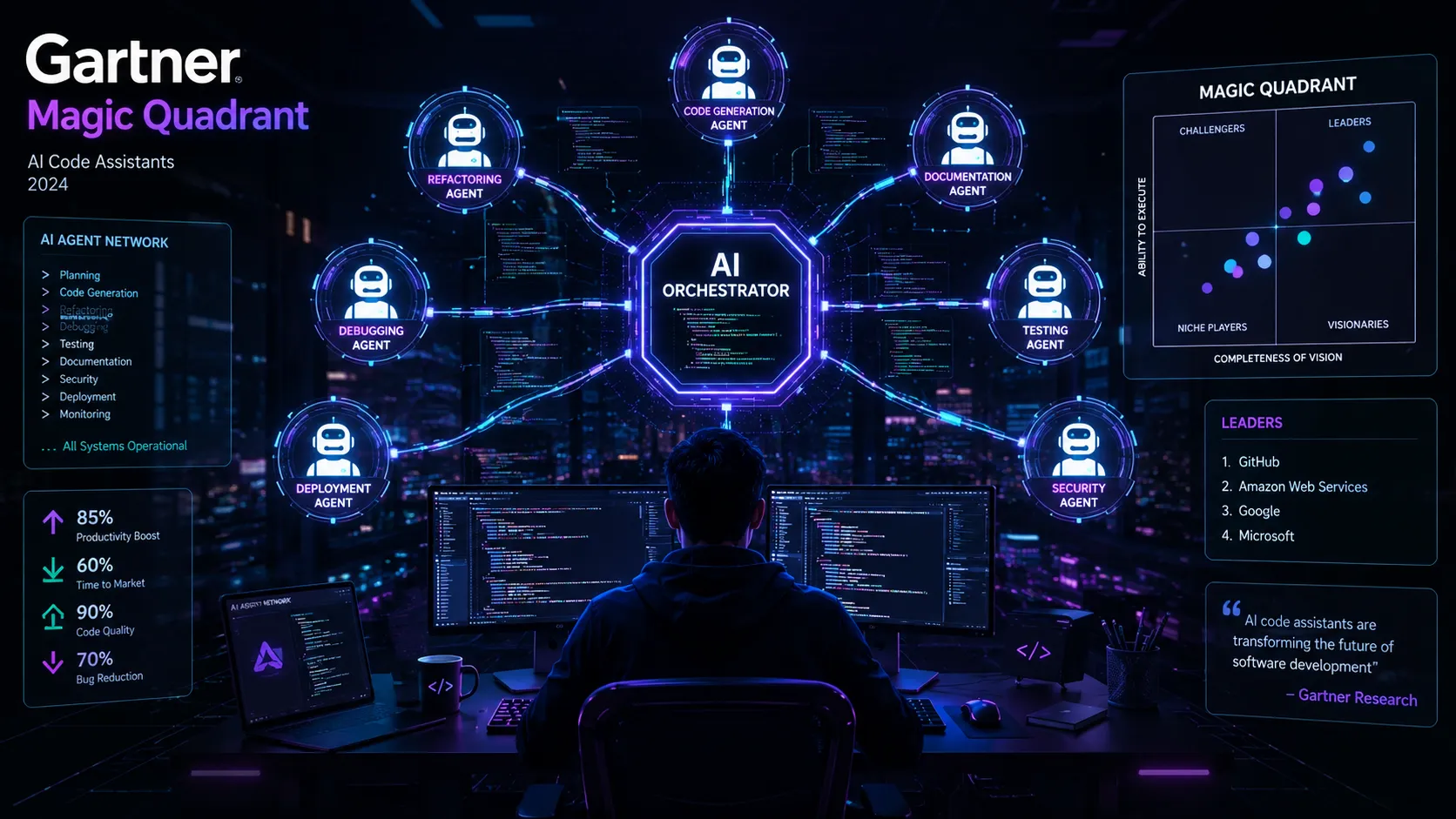
Image: AI agents are becoming active collaborators in the software development lifecycle.
What Are Enterprise AI Coding Agents?
Enterprise AI coding agents are autonomous or semiautonomous software engineering solutions that perceive context, translate human intent into multistep plans, and execute and verify those steps across code, tests and related engineering artifacts.
That is a much higher bar than traditional AI code assistants. While code assistants primarily suggest code, complete snippets, and answer questions in chat interfaces, enterprise AI coding agents allow teams to delegate and offload a greater portion of development work through dynamic task planning and tool use.
In simple terms: AI code assistants help you write code faster. AI coding agents do the work for you.
The Market: $11 Billion and Growing
The numbers are staggering. The enterprise AI coding agent market is estimated at roughly $9.8 billion to $11.0 billion annualized as of April 2026.
Industry analysts project that by 2028, asynchronous AI coding agent workflows will improve software engineering team productivity by 30% to 50%, surpassing the 0% to 20% gains from AI code assistants in 2025.
Adoption is accelerating rapidly. By early 2026, 74% of developers worldwide had already adopted specialized AI tools for developers.
Gartner's First Magic Quadrant: Who Is Leading?
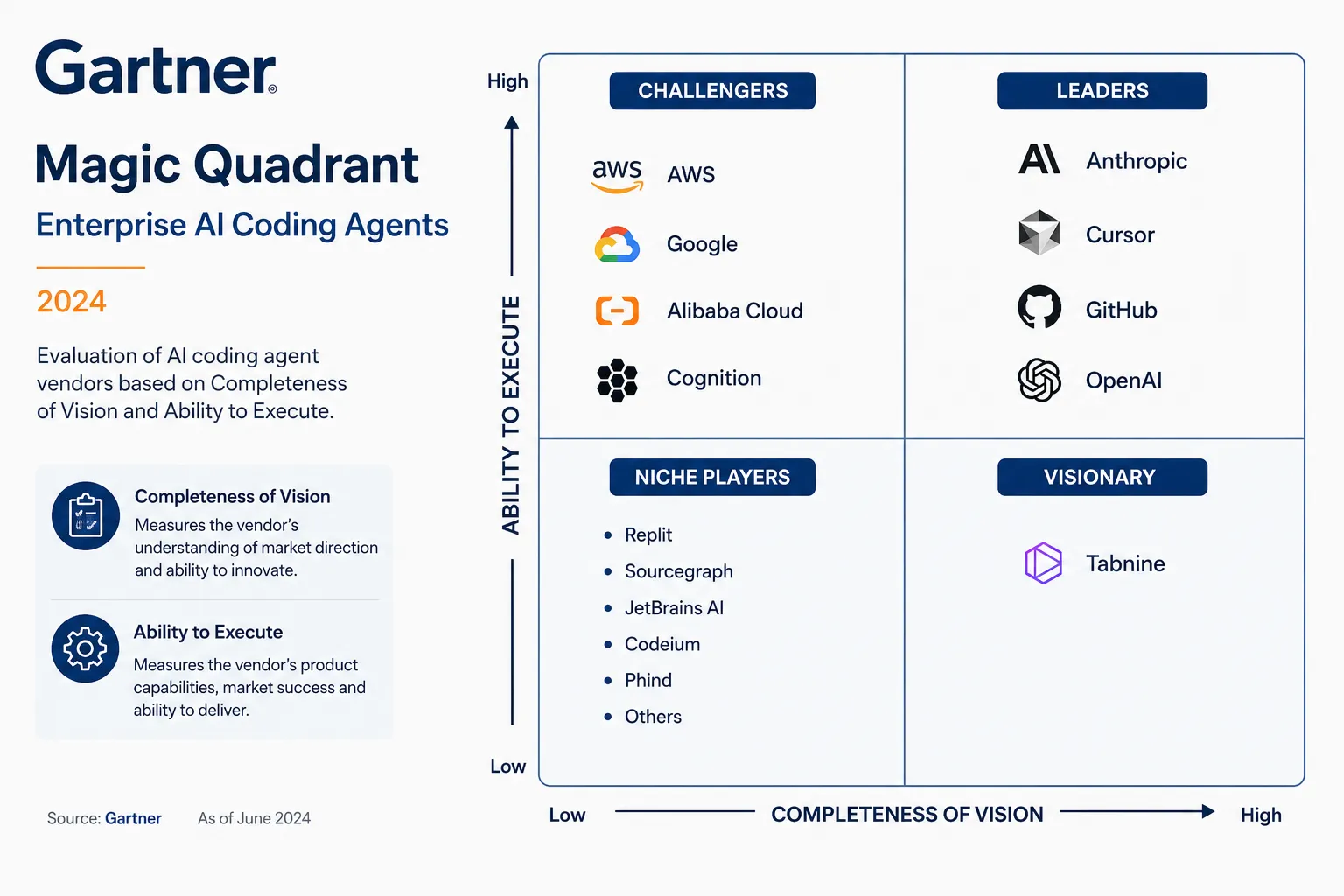
In May 2026, Gartner published its first-ever Magic Quadrant for Enterprise AI Coding Agents — a major milestone for the industry.
The report names Anthropic, Cursor, GitHub, and OpenAI as Leaders. AWS, Google, Alibaba Cloud, and Cognition are listed as Challengers. Tabnine is the only Visionary.
This represents a significant shift. In previous years, cloud giants like AWS and Google were Leaders in Gartner's AI code assistant reports. Now, AI-first companies dominate the Leaders quadrant.
This is described as a structural fork in the market. Frontier model providers that once supplied underlying AI infrastructure are now launching full-featured coding agents that compete directly with application-layer products.
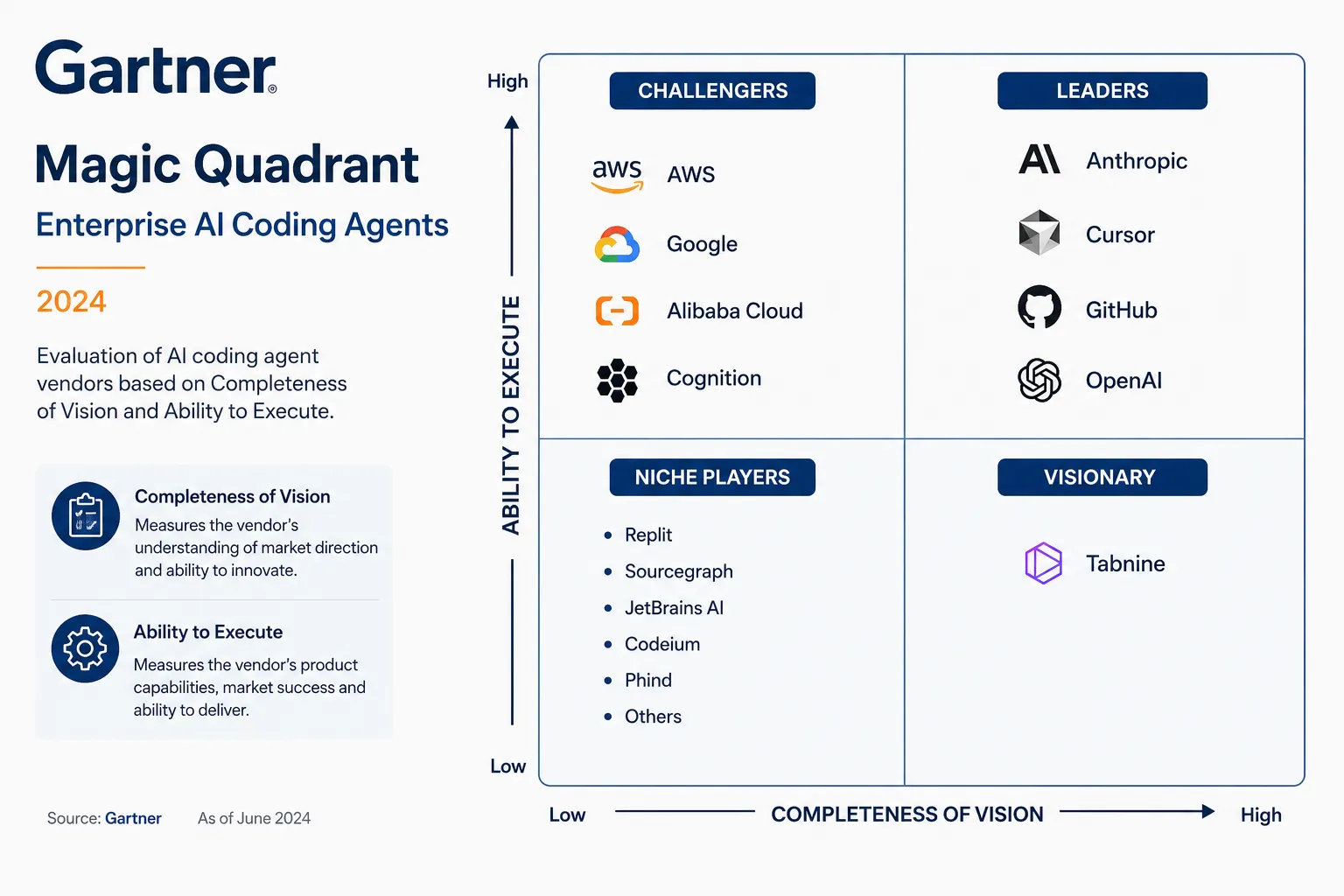
Image: Gartner's first Magic Quadrant for Enterprise AI Coding Agents shows AI-first companies leading the market.
From Single-Threaded to Orchestrated Multiagent Workflows
The biggest shift in 2026 is the move from single-threaded assistance to orchestrated, multiagent workflows.
Instead of one AI helping one developer with one task, organizations are now deploying coordinated teams of AI agents that work in parallel. Tasks are decomposed into streams handled simultaneously, spanning local sessions and background or cloud-based execution.
This evolution is changing how development work is managed. Developers are moving from writing prompts to orchestrating agent behavior — managing concurrency, visibility, and control of multiple AI agents working in parallel.
Productivity Gains Are Real
Industry data shows that 90% of engineering leaders report productivity improvements from AI coding agents, with a net average productivity gain of 19.3%.
The category now includes coding assistants, AI-native IDEs, terminal-based agents, and agentic platforms. Vendors are shifting from seat-based subscriptions to usage-based pricing, reflecting the compute demands of agentic workflows.
As code generation matures, vendors are expanding into adjacent areas of the software development life cycle, including code review, testing, and design.
AI Is Becoming Infrastructure, Not Just Hype
Technology leaders are highlighting a shift toward more pragmatic, resilient uses of artificial intelligence in business.
As one industry expert put it: "Not long ago, AI felt like a competitive advantage. Today, it is rapidly becoming infrastructure."
AI now underpins workflows, shapes security assumptions, and reshapes white-collar roles in fields such as tax and finance.
AI can compress the time between vulnerability discovery and exploitation from weeks to minutes, changing the economics of cyber risk more than the nature of the threat itself.
What This Means for Developers
Enterprise AI coding agents are moving from assistive tools to systems that function as collaborators and execute meaningful portions of development work.
This shift introduces new challenges around visibility, control, and governance, particularly as workflows scale.
For developers, the message is clear: Your role is evolving from code writer to AI orchestrator. The people who thrive will be those who learn to manage AI agents, not just compete with them.
Final Thoughts
2026 is the year agentic AI went mainstream. Enterprise AI coding agents are no longer experimental — they are transforming how software is built, tested, and deployed.
With Gartner's first Magic Quadrant validating the market, and productivity gains of 30-50% on the horizon, the question is no longer whether to adopt AI coding agents, but how quickly.
The tools are changing. The workflows are changing. The role of the developer is changing. The only question is: Are you ready for it?
WebStudioLabs covers the latest in AI, software engineering, and technology trends. Bookmark us for more insights on where the industry is heading.