
AI Coding Assistants in 2026: The Complete Guide to the $16B Revolution
Three years ago, AI coding assistants were a novelty. Developers used them for autocomplete and simple suggestions. Today, they are an essential part of the software development lifecycle — and the market is exploding.
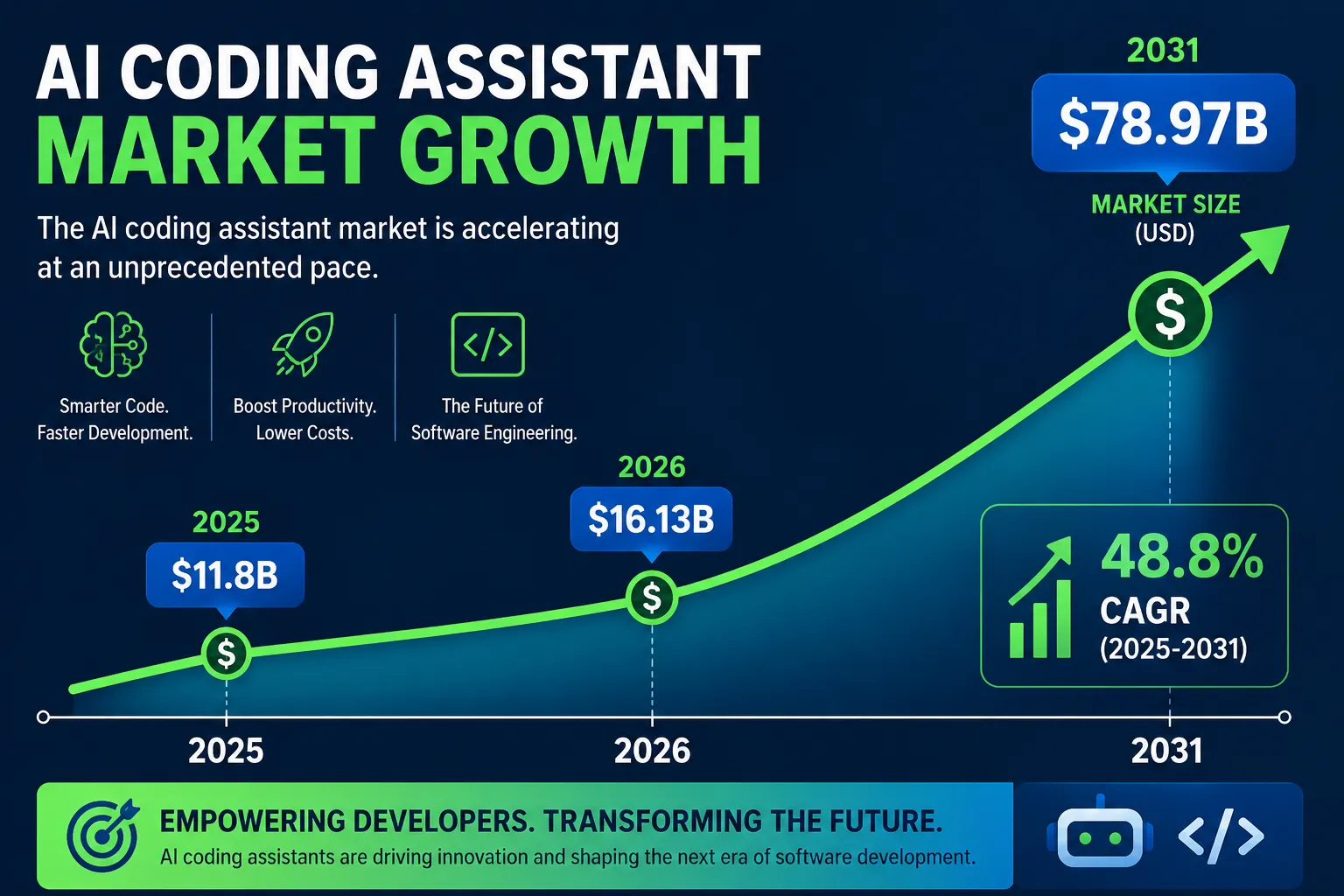
From $11.8 billion in 2025 to a projected $78.97 billion by 2031, the AI coding assistant market is growing at an extraordinary pace. But the numbers only tell half the story.
Here is everything you need to know about AI coding assistants in 2026: the market, the tools, the trends, and what it means for developers.
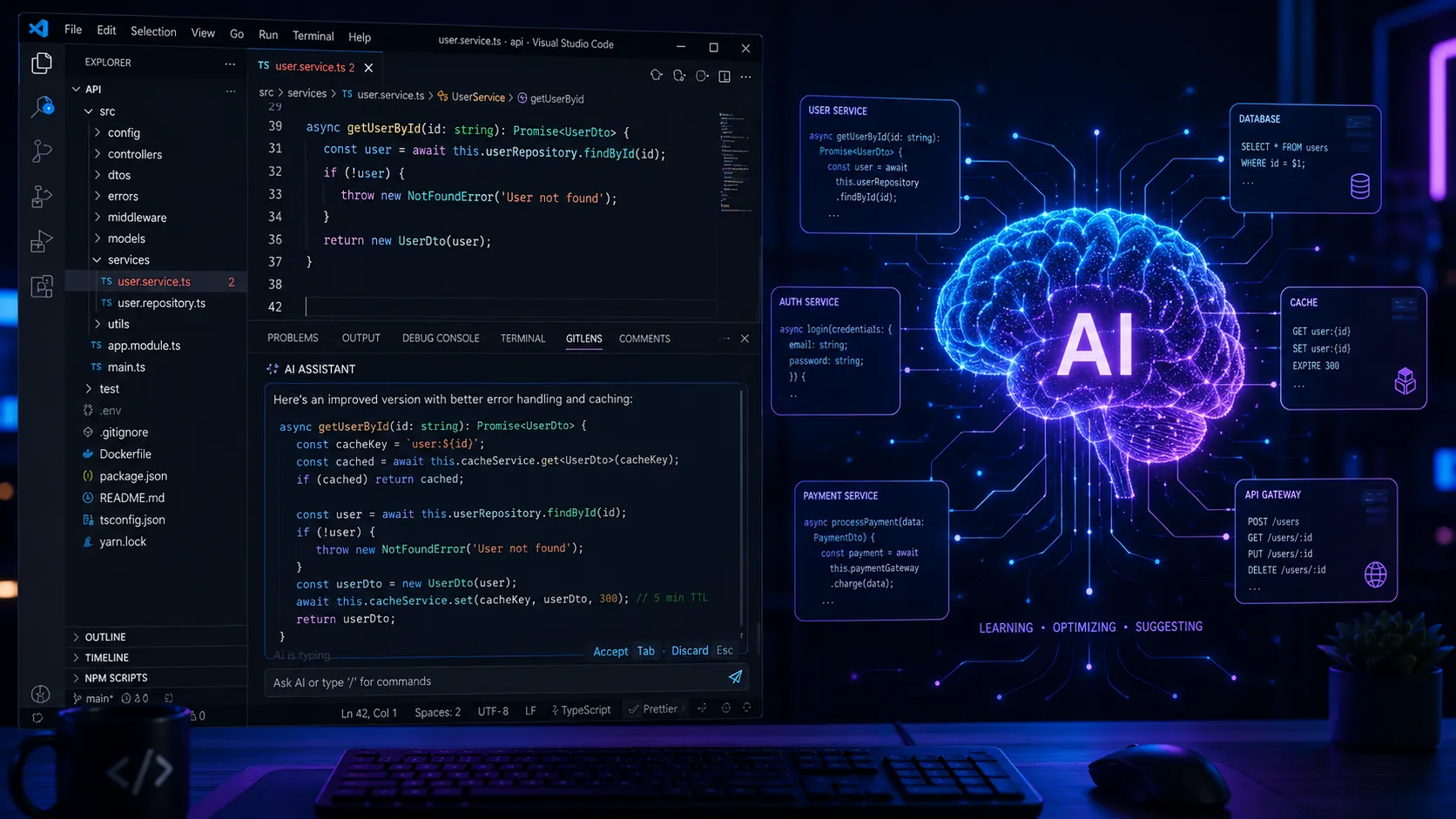
Image: AI coding assistants are now an essential part of the developer toolkit.
The Market: $16 Billion and Growing Fast
The numbers are staggering. The AI code generation and developer assistant market is projected to reach $16.13 billion in 2026 — up from $11.8 billion in 2025. By 2031, it is expected to hit $78.97 billion.
The broader AI code tools market is projected to reach $9.35 billion in 2026, growing at over 26% CAGR. The AI Coding Assistants Software market alone is estimated at $527 million in 2026.
Regardless of how you measure it, one thing is clear: AI coding is big business — and it is only getting bigger.
Adoption: 97% of Developers Are Using AI Coding Tools
The adoption numbers are even more remarkable than the market size.
By early 2026, 74% of developers worldwide had already adopted specialized AI tools for developers — not just chatbots like ChatGPT.
A recent study found that 97% of developers are actively using AI coding tools — but here is the catch: only 30% have a fully governed approach to oversight.
GitHub Copilot and Claude Code dominate the space, used by 83% and 63% of teams respectively, and most teams run more than one assistant.
Nearly 50% of developers now use coding assistants like Cursor and GitHub Copilot, with usage in frontier companies reaching 90%.
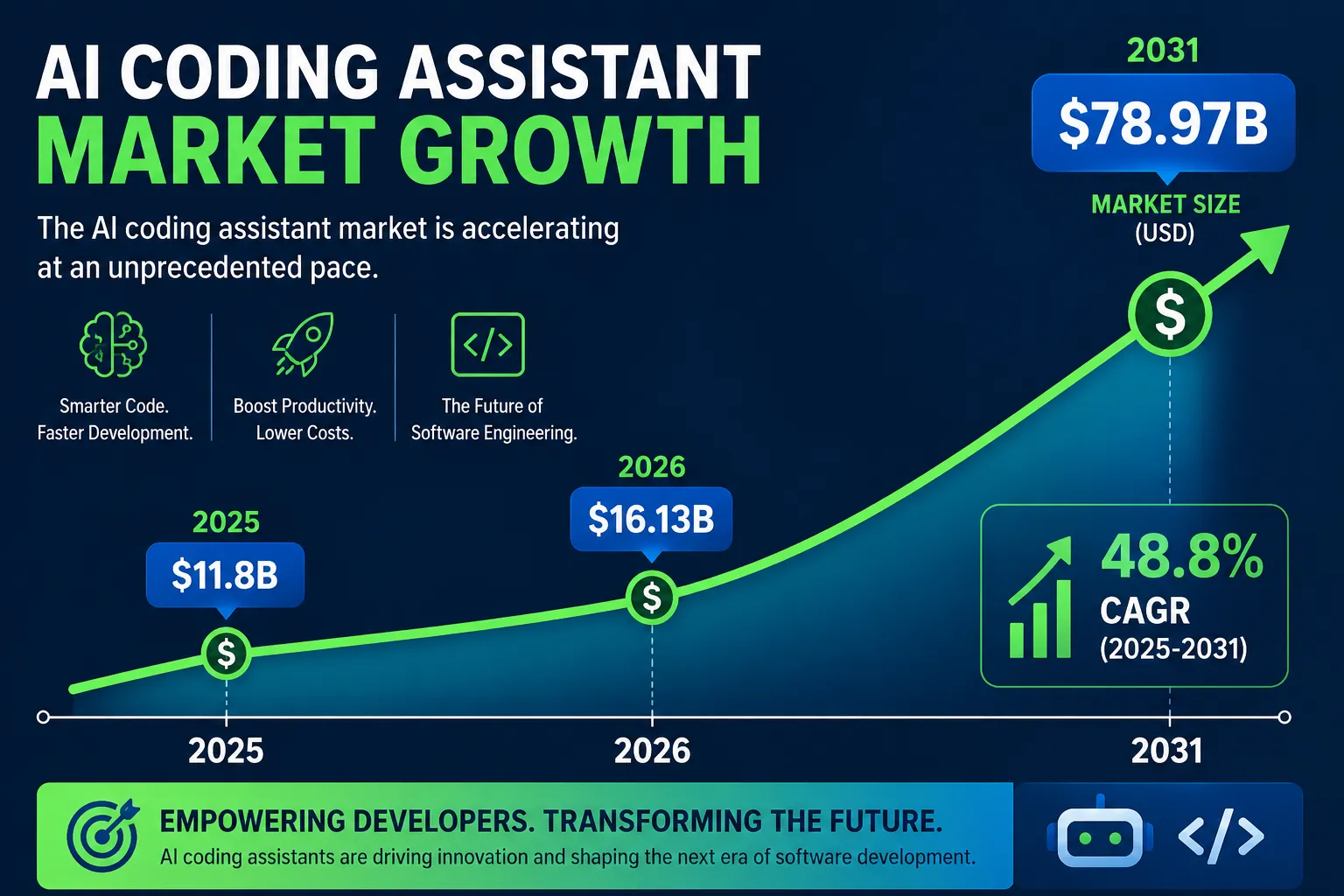
Image: The AI coding assistant market is projected to reach $78.97 billion by 2031.
The Big Shift: From Assistants to Agentic Teams
2026 is the year everything changed. We have moved beyond single AI assistants that suggest code. We are now in the era of agentic AI — coordinated agent teams that can run autonomously for hours or days.
This is the shift from single AI assistants to coordinated agent teams — while engineers move from writing code to orchestrating the systems that write it.
The market is shifting from single-threaded assistance to orchestrated, multiagent workflows.
Who Is Leading in 2026?
For the first time, industry analysts have published a dedicated assessment of enterprise AI coding agents in 2026.
Anthropic, Cursor, GitHub, and OpenAI are recognized as Leaders. AWS, Google, Alibaba Cloud, and Cognition are listed as Challengers. Tabnine is the only Visionary.
A defining shift in 2026 is the movement of frontier model providers into direct competition with application-layer vendors. Organizations that once supplied underlying models are now delivering full-featured coding agents, blurring traditional ecosystem boundaries.
The Top AI Coding Assistants in 2026
Three AI coding tools dominate the conversation in 2026: GitHub Copilot, Cursor, and Claude Code. Between them, they cover more than 15 million developers, attracted over $2 billion in venture funding, and appear in virtually every developer tools discussion.
Here is how they stack up:
GitHub Copilot leads for general use and autocomplete. It is the most widely adopted tool, used by 83% of teams.
Cursor wins for deep codebase awareness and is the AI-native IDE most developers leaving Copilot land on first.
Claude Code is the consensus first pick for engineers working on existing production codebases — it reads the repo, runs your tests, and commits PRs without forcing you out of your terminal.
Other notable tools include Windsurf, Aider, Cline, Amazon Q Developer, and OpenAI Codex.
Terminal-first assistants like Claude Code, OpenAI Codex, and Aider grew fastest in 2025-2026 because they plug into CI scripts and agent workflows, not just editors.
How AI Coding Assistants Are Used in 2026
The use cases have expanded far beyond simple autocomplete.
Multi-Agent Coordination: Organizations are mastering multi-agent coordination, scaling human-agent oversight through AI-automated review, and extending agentic coding beyond engineering teams.
Embedded Security: Security architecture is being embedded from the earliest stages. A significant majority of technology teams now frequently or always prompt AI tools to explicitly include logging hooks, span attributes, and custom metrics as part of the initial code output.
Massive Productivity Gains: Developers are merging significantly more lines of code changes in 2026 compared to the previous year — a 3x increase in many cases.
Challenges: Governance and Trust
Despite the explosive growth, challenges remain.
Governance is lagging. While 97% of developers are using AI coding tools, only 30% have a fully governed approach to oversight. This creates significant security and compliance risks.
Trust is still an issue. A significant percentage of developers do not fully trust AI outputs. And interestingly, senior developers sometimes become slower with AI assistance.
Security is not keeping up. Software is now written at the speed of thought — but security is not. This is why security architecture must be embedded from the earliest stages.
The Future: What to Expect by 2030
The trajectory is clear. Industry analysts predict that 80% of organizations will evolve large software engineering teams into smaller, AI-augmented teams by 2030.
We are moving toward a future where AI agents handle routine coding tasks while developers focus on higher-order problems — architecture, design, system thinking, and orchestrating the AI systems that write the code.
The AI coding assistant market is projected to reach $78.97 billion by 2031. And with 97% adoption already, we are only at the beginning of this transformation.
Final Thoughts
AI coding assistants are no longer a novelty — they are a necessity. From $11.8 billion to $78.97 billion in just six years. From 74% to 97% adoption in months. From simple autocomplete to autonomous agent teams.
2026 is the year software engineering transformed from a craft into an orchestration discipline. AI agents are writing code. Multi-agent workflows are becoming the norm. And developers are moving from writing code to orchestrating the systems that write it.
The tools are changing. The workflows are changing. The skills are changing. The only constant is change itself — and in 2026, that change is accelerating faster than ever.
The future of software development is already here. Are you ready for it?
WebStudioLabs covers the latest in AI, software development, and technology trends. Bookmark us for more insights on where the industry is heading.
Check out our Services here