
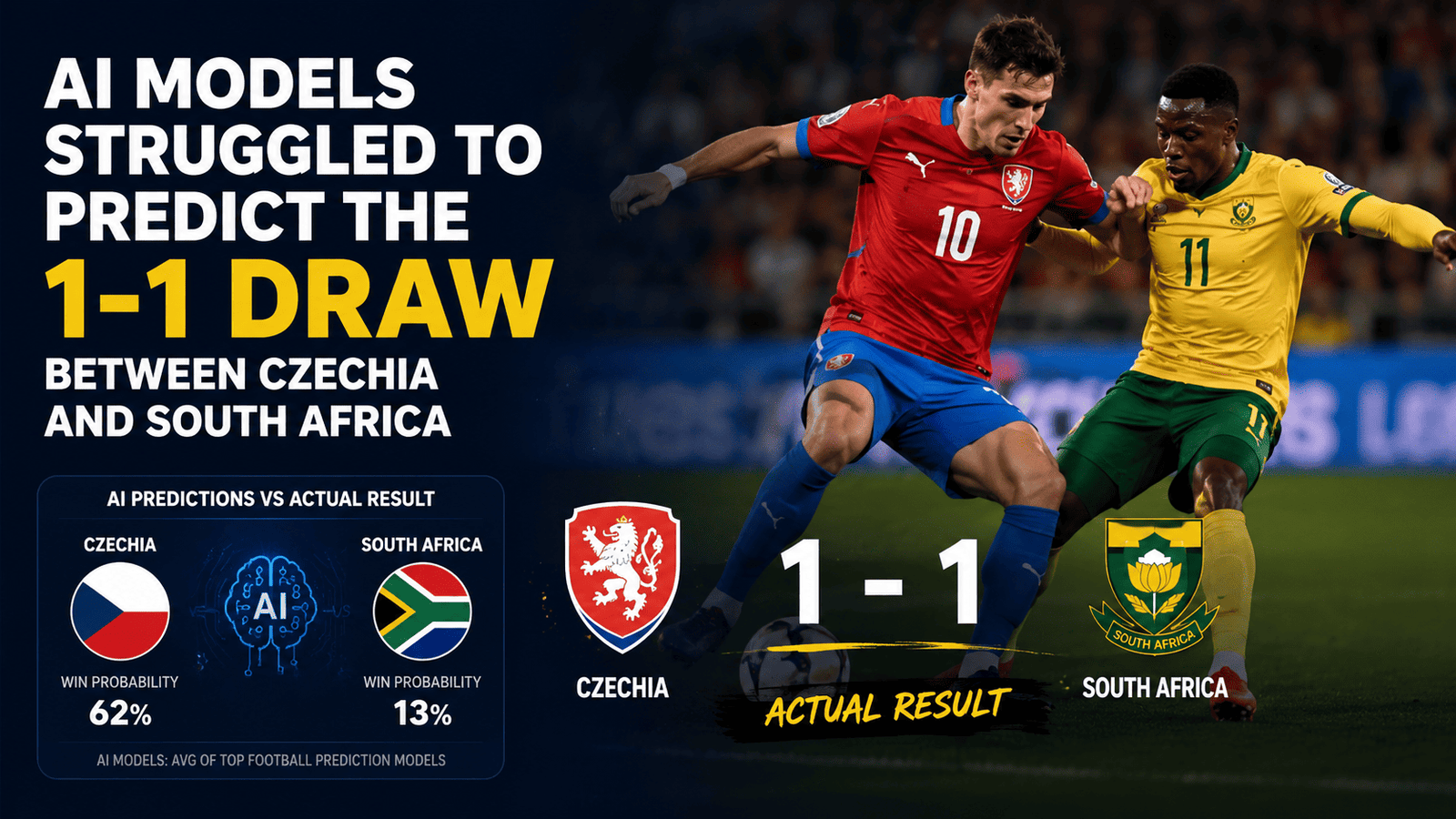
AI Failed to Predict Czechia vs South Africa Draw — Here's Why
Here is something interesting. On Thursday, 12 artificial intelligence models predicted the outcome of the Czechia vs South Africa World Cup match. Eleven of them were wrong. Only one got it right.
The match ended in a 1-1 draw. Most AIs predicted Czechia would win comfortably — 1-0 or 2-0. Only iFlytek Spark (Xunfei Xinghuo) correctly called the 1-1 draw.
This is not just about one match. This tells us something important about AI, sports, and how machines try to understand human competition.
Image: AI models struggled to predict the 1-1 draw between Czechia and South Africa.
What Actually Happened in the Match
Before we talk about AI, let me quickly summarize the match.
Czechia scored first. Michal Sadilek found the net in the 6th minute — the fastest goal of the 2026 World Cup so far. South Africa struggled to create chances. They did not have a single shot on target until the 74th minute.
But then, in the 82nd minute, something changed. A shot from Thapelo Maseko hit Czechia substitute Pavel Sulc on the hand. Referee Tori Penso pointed to the penalty spot.
VAR reviewed it. They confirmed the decision. Teboho Mokoena stepped up, sent the keeper the wrong way, and scored. 1-1. The match ended in a draw.
South Africa had 61% possession. They completed 541 passes at 90% accuracy. Czechia had only 39% possession but created better chances — an xG of 0.82 compared to South Africa's 0.26.
Statistically, Czechia should have won. But football does not always follow statistics. That is where AI got confused.
How AI Models Predicted This Match
Before the match, 12 major AI models made their predictions. These included DeepSeek, Alibaba Tongyi Qianwen, Baidu Wenxin, Tencent Hunyuan, Kimi, Zhipu, and others.
Eleven of them said Czechia would win. Most predicted 1-0 or 2-0. Some gave Czechia a 55% win probability. Others went as high as 71%.
Only one model — iFlytek Spark — predicted a 1-1 draw. And it was exactly right.
Why did so many AI models get it wrong? The answer lies in how these models work.
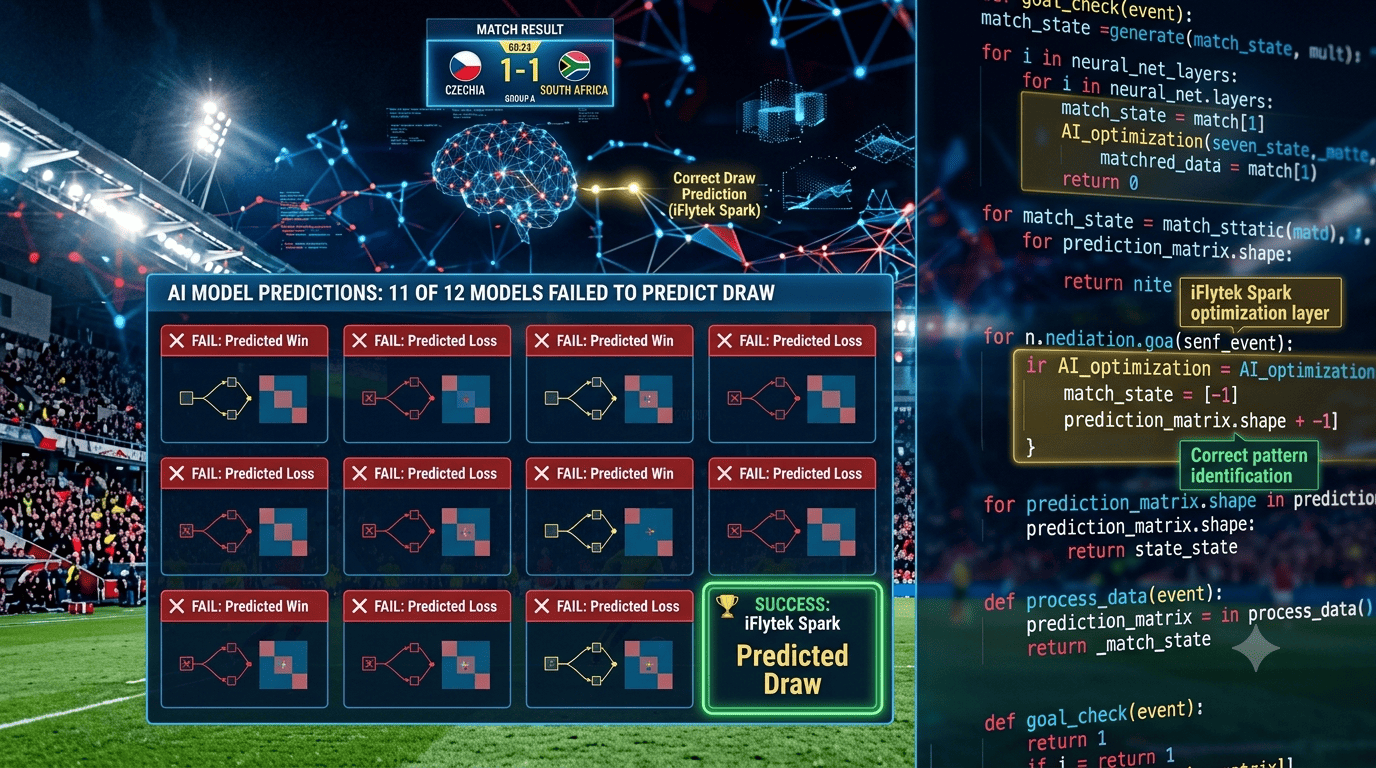
Image: 11 out of 12 AI models failed to predict the draw. Only iFlytek Spark got it right.
Why AI Failed to Predict the Draw
Here is the technical reason.
Most AI models rely heavily on long-term stable indicators — FIFA rankings, historical head-to-head records, overall squad quality, and past performance. Czechia is ranked higher. They have more European experience. On paper, they are the better team.
But football is not played on paper. It is played on grass, with 22 humans, one ball, and a thousand unpredictable moments.
The models that predicted a Czechia win failed to account for several factors:
- South Africa's desperation: They lost their opening match 2-0 to Mexico. They had two players sent off in that game. They needed a result badly. That changes how a team plays.
- The handball decision: No AI model could predict a controversial VAR call in the 82nd minute. That is not in the data.
- Late-game pressure: Czechia was defending a 1-0 lead for 75 minutes. Fatigue, mistakes, and pressure are hard to quantify.
- The human factor: Teboho Mokoena stepped up to take a penalty in front of 70,000 fans. He kept his cool. That is not in any algorithm.
AI models are great at analyzing patterns from past data. But football is chaotic. Unexpected things happen. That is why we watch.
The VAR Controversy — Technology That Works (Sometimes)
Now let us talk about the technology that did make a difference — VAR.
The handball decision was controversial. Many fans thought it was harsh. Sulc was standing close to Maseko. His arm was not stretched out unnaturally.
But VAR reviewed it. They confirmed the on-field decision.
Fans were furious. One wrote: "If that's handball the game's gone." Another said: "I am confused about that handball call."
This is where technology meets human judgment. VAR is supposed to correct clear and obvious errors. In this case, the referee's original decision was not clearly wrong. So VAR did not overturn it.
But was it the right call? That depends on who you ask. And that is the problem with technology in sports — it does not remove controversy. It just changes where the controversy happens.
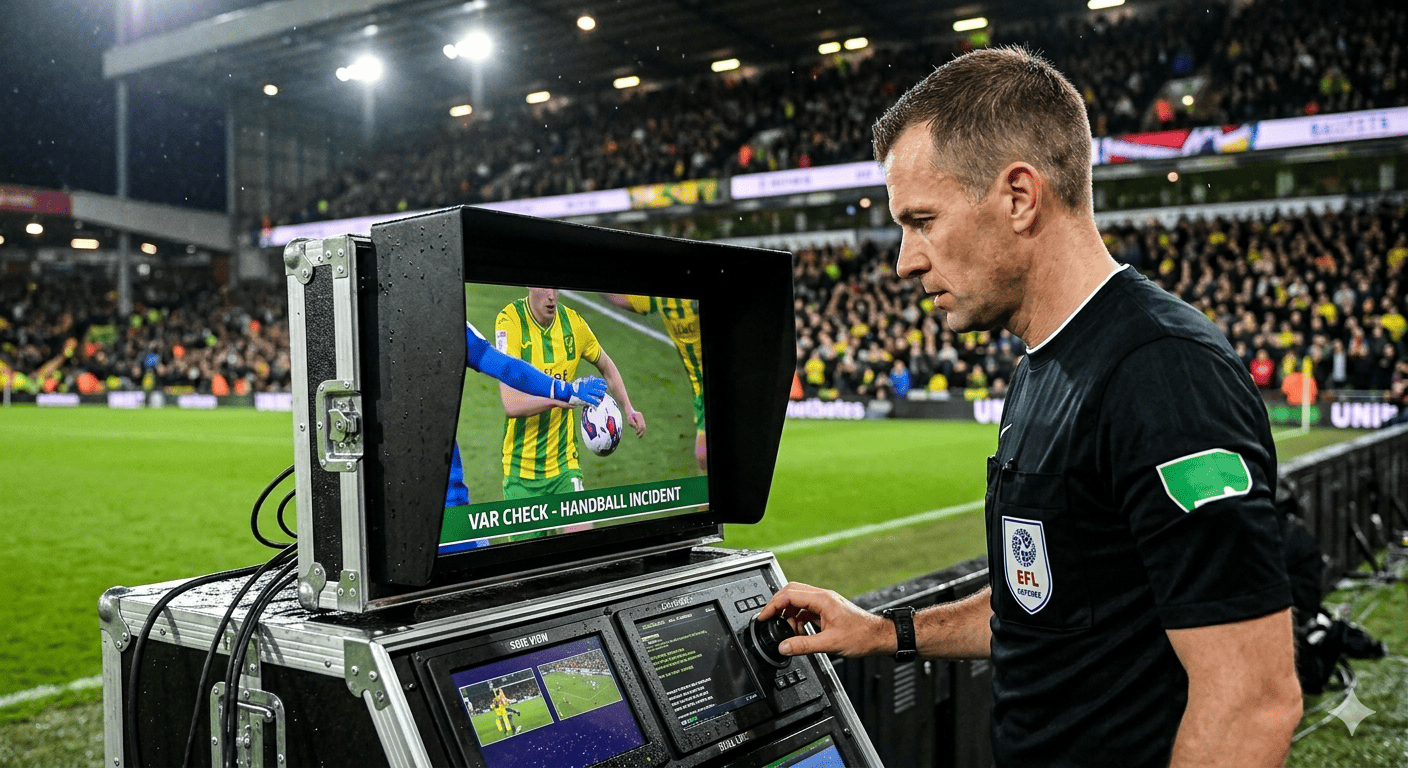
Image: VAR review confirmed the handball decision that led to South Africa's equalizer.
The Trionda Ball — The Real AI on the Pitch
While AI models were failing to predict the match, another piece of AI technology was actually on the pitch — the Trionda ball.
This is the official match ball of the 2026 World Cup. And it is packed with technology.
Inside the ball is a 500Hz motion sensor weighing about 14 grams. It records the ball's movement in real time — speed, spin, trajectory, and impact.
This data feeds into an AI system that creates real-time 3D tracking. This helps officials make faster and more accurate decisions on offsides, penalties, and goal-line incidents.
The ball also uses wireless charging. A full charge takes about 90 minutes and lasts for 6 hours of play.
Experts call it one of the most technologically advanced balls ever used in World Cup history.
But here is the irony. The Trionda ball with its AI sensor could not prevent the handball controversy. It could track the ball's movement. It could tell exactly where the ball hit Sulc's hand. But it could not decide if that should be a penalty.
That decision still requires a human referee. And that is where controversy lives.
What This Tells Us About AI and Sports
This match is a perfect case study for anyone interested in AI and sports.
AI is great at analyzing patterns. It can process thousands of data points — possession, shots, passes, historical results — and make predictions. But it struggles with the unpredictable — a controversial handball, a player's mental state, the pressure of a World Cup penalty.
AI is not a crystal ball. It gives probabilities, not certainties. Czechia had a 52.9% chance of winning according to Opta's supercomputer. That means there was still a 47.1% chance they would not win. The AI models that predicted a Czechia win ignored that other 47%.
The draw is AI's kryptonite. Recent matches have shown that draws are particularly hard for AI to predict. Most models are trained to predict a winner. A draw is often the least likely outcome in their calculations. But in tournaments like the World Cup, draws happen frequently.
Technology helps, but it does not replace humans. VAR, Trionda ball sensors, and AI tracking all assist referees. But the final decision still belongs to a human. And humans make mistakes. Or at least, they make decisions that other humans disagree with.
Final Thoughts
I watched this match live. When South Africa got that penalty in the 82nd minute, I thought about all those AI models that predicted a Czechia win. Eleven of them were about to be proven wrong. Only one would be right.
That is the beauty of sports. It humbles the experts. It surprises the algorithms. It reminds us that no matter how much data we collect, we cannot predict everything.
AI will get better. Models will improve. They will learn from matches like this and adjust their algorithms. But football will always have moments that no machine can foresee.
A controversial handball. A calm penalty under pressure. A draw when everyone expected a win.
That is why we watch. That is why we care. And that is why AI will never fully understand the beautiful game.
Next time someone tells you AI can predict everything, show them this match.
WebStudioLabs covers the intersection of technology and sports. Bookmark us for more analysis on AI, VAR, and the future of football.
Check out our Custom Web Application Development Service here