Agentic AI 2026: The Shift from Chatbots to Autonomous Agents
July 2026 | 7 min read | WebStudioLabs
For the past two years, AI adoption has largely meant chatbots and content generation tools. You asked ChatGPT to write an email. You prompted Midjourney to create an image. You typed a question into a chat window and waited for a response.
In 2026, that era is ending.
The focus has shifted to something far more powerful: Agentic AI. These are AI systems that don't just respond to prompts — they plan tasks, use external tools, and complete complex workflows with minimal human involvement.
This is not a subtle evolution. This is a fundamental transformation of how businesses operate, how software is built, and how work gets done.
Here is everything you need to know about Agentic AI in 2026.
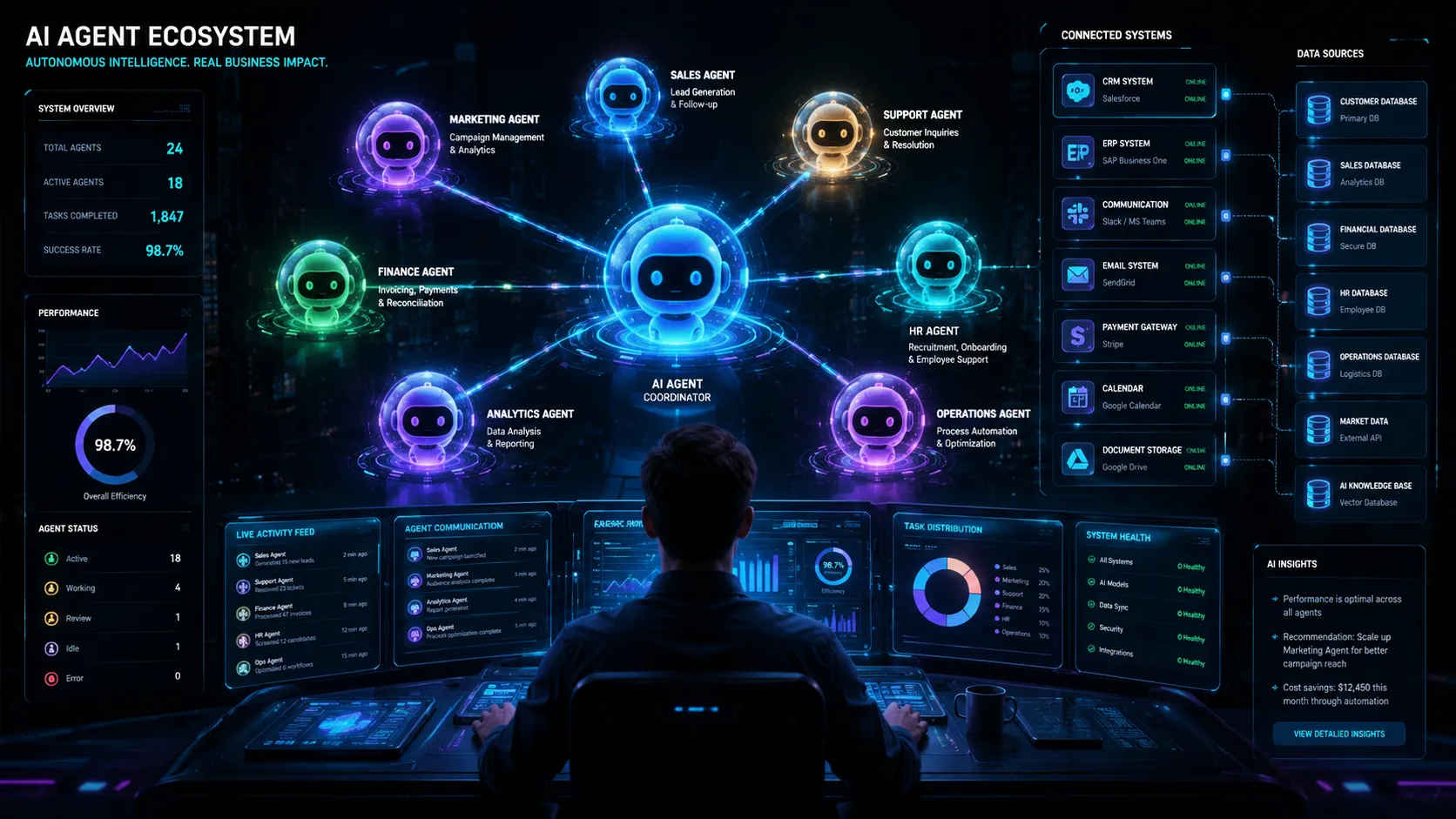
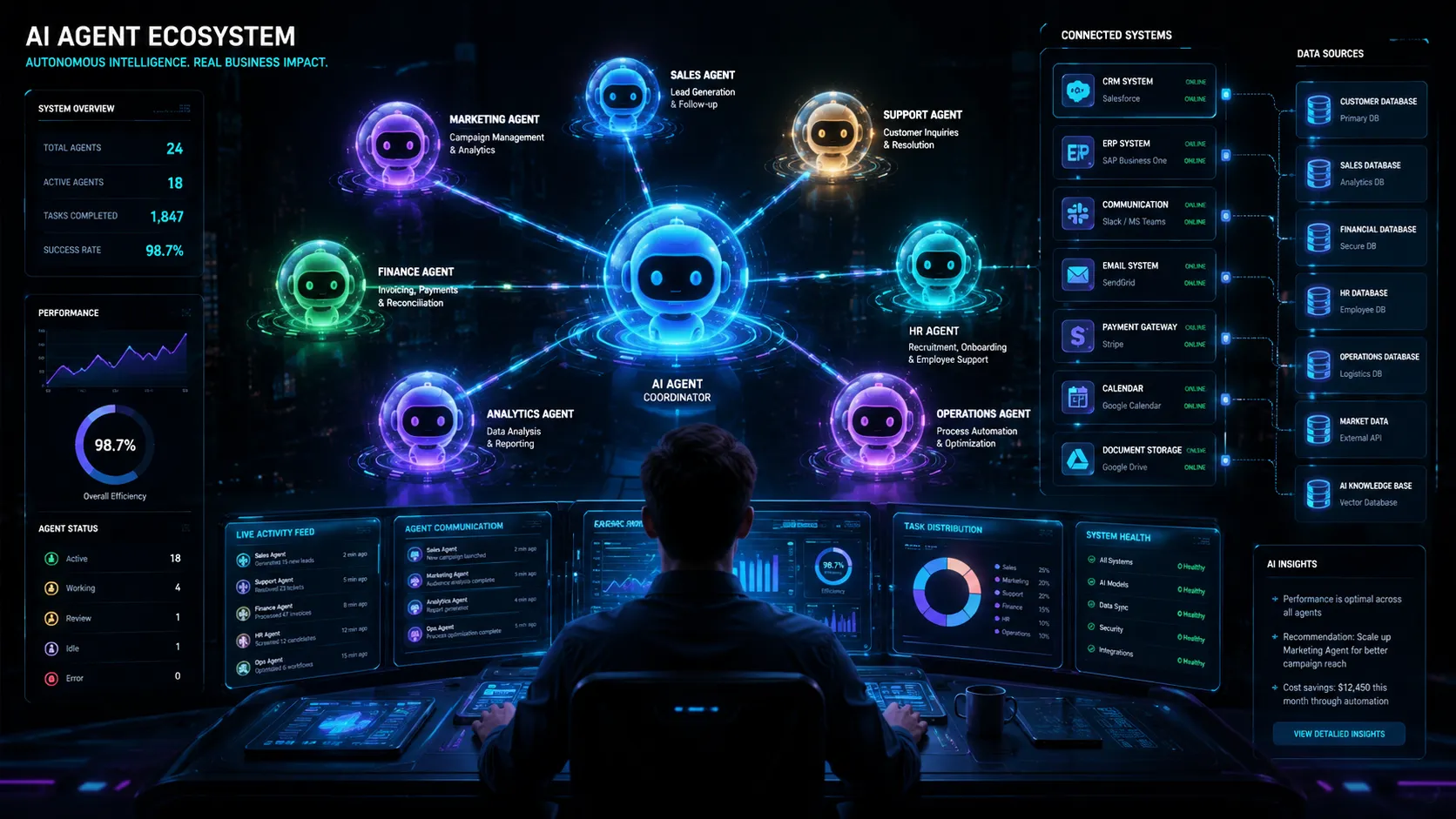
Image: Agentic AI systems are transforming from passive tools to active digital workers.
What Is Agentic AI?
Agentic AI refers to autonomous or semi-autonomous AI systems that can perceive context, translate human intent into multi-step plans, and execute those plans across various tools and systems.
Unlike traditional chatbots that simply respond to queries, agentic AI systems can:
- Plan tasks — Break down complex requests into actionable steps
- Use external tools — Access APIs, databases, and applications
- Complete workflows — Execute multi-step processes from start to finish
- Learn from feedback — Improve performance over time
- Coordinate across systems — Orchestrate work across different platforms
As Qualcomm's Durga Malladi put it: "Tomorrow it's the agent that's going to be doing the work and the agent will figure out what runs on the cloud and what runs on the device. That's a very big change."
Why 2026 Is the Year of Agentic AI
Three forces have converged to make 2026 the breakthrough year for agentic AI.
First, the technology matured. Generative AI proved that machines can understand and generate human language. The next logical step was giving those systems the ability to take action.
Second, the infrastructure arrived. Companies like OpenAI, Qualcomm, and Google built the platforms needed to deploy AI agents safely and at scale. OpenAI launched Presence, a platform designed to connect enterprise voice and chat agents with corporate systems, incorporating permissions, operational boundaries, simulations, and human-escalation triggers.
Third, the business case became undeniable. Enterprise automation is reshaping employment. British Gas owner Centrica plans to eliminate 1,300 roles, primarily in customer and group support, as customers increasingly use online services and call volumes decline.
The Adoption Numbers: From Experimentation to Deployment
The numbers tell a clear story of rapid adoption.
According to Gartner's 2026 CIO and Technology Executive Survey, only 17% of organizations have already deployed AI agents.
But here is where it gets interesting: more than 60% plan to do so within the next two years. This represents the fastest expected adoption rate among all emerging technologies surveyed.
Gartner reports that 75% of enterprises are experimenting with AI agents. However, only 15% are deploying fully autonomous, goal-driven systems.
Worldwide end-user spending on AI models and platforms will total $64.25 billion in 2026, up 63.4% from $39.31 billion last year.
From Generative AI to Agentic AI: The Shift
The transition from generative AI to agentic AI represents a fundamental shift in how we think about artificial intelligence.
Generative AI is reactive. It waits for a prompt and generates a response. It is a tool that you use.
Agentic AI is proactive. It identifies problems, plans solutions, and takes action. It is a digital worker that you manage.
This shift requires organizations to redesign their governance models. As one industry report noted: "Businesses must stop thinking of AI as a prompt-based tool that simply responds to commands. Instead, AI should be viewed as a digital workforce capable of taking action."
Experts recommend that B2B clients establish strict control mechanisms to oversee automated decisions made by AI agents, preventing risks such as unauthorized contract approvals or incorrect business transactions.
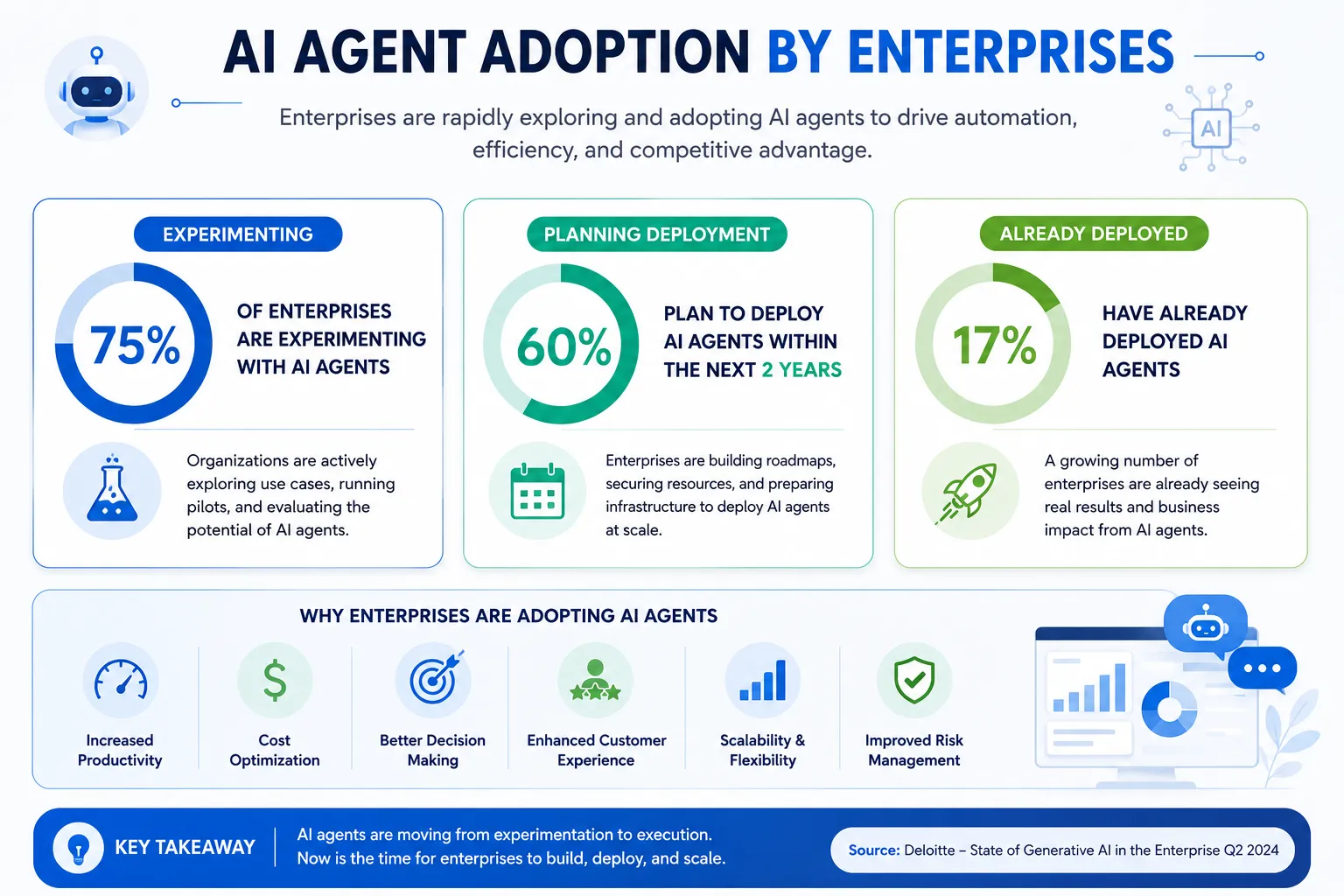
Image: AI agent adoption is accelerating faster than any other emerging technology.
How AI Agents Are Being Deployed
AI agents are moving into workplaces and smartphones in remarkable ways.
In the Enterprise: OpenAI's Presence platform connects enterprise voice and chat agents with corporate systems. It incorporates permissions, operational boundaries, simulations, human-escalation triggers, and mechanisms that let employees control how agents improve — reflecting a push to make autonomous software safer and more manageable in business environments.
In Smartphones: ZTE, StepFun, and Honor demonstrated agentic AI smartphones capable of performing tasks across multiple apps.
In Robotics: Agentic AI is enabling robots to perceive their environment, plan their next move, and act without waiting for a round trip to the cloud.
In Customer Service: British Gas owner Centrica is eliminating 1,300 roles as customers increasingly use online services.
The Hybrid AI Model: Where Does the Work Run?
One of the most important developments in agentic AI is the emergence of hybrid AI — where agents decide where work should run.
Qualcomm's Durga Malladi explained: "We're not religious about, 'Everything has to run on the device' or 'Everything has to go on the cloud.'"
Instead, agents will determine the optimal location based on:
- Task requirements — What needs to be accomplished
- Latency needs — How fast the response must be
- Local context — What information is available on the device
- Cost — The expense of running the model
- Data sensitivity — Privacy and security requirements
This approach changes what the underlying hardware and software have to support. Agentic AI may depend on several kinds of processors working together, including CPUs, GPUs, and NPUs.
The Risks: Cybersecurity and Governance
As AI agents gain permission to perform business tasks, they also introduce an entirely new attack surface that traditional security systems were never designed to protect.
According to a Dark Reading reader survey, 48% of cybersecurity professionals are concerned about the security risks posed by AI agents.
This is why governance is critical. Organizations must establish strict control mechanisms to oversee automated decisions made by AI agents, preventing unauthorized actions and ensuring compliance.
What This Means for Businesses
Agentic AI is not a distant future — it is happening now. Here is what it means for your business:
AI is becoming a digital workforce. Stop thinking of AI as a prompt-based tool. Start thinking of it as capable of taking action.
Governance matters more than ever. With AI agents making decisions, you need clear control mechanisms, permissions, and escalation protocols.
The infrastructure is here. Platforms like OpenAI's Presence are making agentic AI deployable and manageable at enterprise scale.
Adoption is accelerating. 60% of enterprises plan to deploy AI agents within two years. Those who wait risk falling behind.
Final Thoughts
The shift from generative AI to agentic AI is the defining technology trend of 2026. We are moving from AI that responds to commands to AI that takes action. From chatbots to digital workers. From prompts to autonomous workflows.
This is not a subtle evolution. This is a fundamental transformation of how businesses operate, how software is built, and how work gets done.
Gartner reports that worldwide IT spending is forecast to reach $6.31 trillion in 2026, representing a 13.5% increase compared with the previous year. A significant portion of that spending will be directed toward AI infrastructure, platforms, and agents.
The question is no longer if AI agents will matter. It is how quickly you will deploy them — and whether you will lead or follow.
The age of agentic AI is here. Are you ready for it?
WebStudioLabs covers the latest in AI, software development, and technology trends. Bookmark us for more insights on where the industry is heading.
For Project Enquiry click here
Have Questions or Need Custom Features?
Connect directly with Rishi Koushal (10+ years engineering experience). Get instant technical support, code customizations, or project estimates on WhatsApp.